

Have you ever felt the urge to get closer to God, read the Bible every day, and have a more consistent prayer life, but you didn’t know where to start? Perhaps you bought a Bible, separated a notebook, or even saved some verses, but when it came time to do your devotions, you didn’t exactly know what to do.
If this happens to you, know that it is more common than it seems.
A devotional doesn’t have to be complicated, time-consuming, or perfect. Rather than being an activity that needs to be done, it is an opportunity to cultivate a closer relationship with God through His Word and prayer.
In this guide, you will learn how to start a devotional, even if you have never done one before. We will show you a simple step-by-step guide to create this moment with God and transform Bible reading into a meaningful practice for your life.
What is a devocation?
Devotion is a separate moment intentionally set aside to seek God, read and reflect on the Bible, pray, and apply what has been learned to life.
Rather than simply reading a few verses, the goal is to allow the Word of God to speak to our hearts and help us grow spiritually, because when our spirituality is aligned with God’s will, we will consequently have the necessary conditions to overcome the battles that will arise in our outer world.
The Bible shows us the importance of meditating on the Word:
“Previously, their delight was in the law of the Lord, and in his law they meditated day and night.”
Psalms 1:2
This does not mean that we need to spend hours studying the Bible every day. It means developing the desire to know God and allowing His Word to be part of our journey. The Bible is our compass; we cannot live far from it.
Therefore, do not think of the devotions as a religious obligation. Think of them as a daily encounter with God.
Why perform a devocation?
Life is full of commitments, worries, responsibilities, and distractions. Often, when we realize it, we spend the whole day solving problems and leave little space for what really matters. We cannot let the rush of life separate us from our greatest need.
Taking a few minutes to pray to God can help put your heart in the right place.
Through biblical reading, we learn more about who God is, about His teachings, and about how we should live.
Through prayer, we can present our concerns, thank God, ask for direction, and entrust our plans to the Lord.
And through reflection, we can ask:
“What is God teaching me through this passage?”
Devotion, therefore, does not exist solely to increase our biblical knowledge. It should also produce transformation.

You don't need to start with an hour a day
One of the most common mistakes of those just starting out is setting up a routine that is very difficult to maintain.
The person decides:
“I’ll wake up at five in the morning, read ten chapters of the Bible, write three pages in my notebook, and pray for an hour.”
In the first week, you manage to stick with it. After that, the routine gets too much and you end up giving up.
It doesn't have to be like this.
If you are just starting out, try to set aside 10 to 15 minutes a day.
The most important thing at this early stage is to develop consistency.
You can start with:
- 2 minutes of prayer;
- 5 minutes of biblical reading;
- 5 minutes of reflection;
- 3 minutes of final prayer.
Over time, your time with God can naturally grow, and that is exactly the essential part—being natural.
The goal is not to compete with the clock. It's about cultivating a relationship.
Choose a time that works for you
There is no single “correct” time to do devotions.
Some people like to start their day by seeking God. Others prefer to do it at night, when the house is quieter.
You can choose:
- in the morning, before starting your activities;
- during a break during the day;
- at lunchtime;
- in the evening, before going to bed.
If possible, choose a time when you have fewer distractions and can maintain a certain regularity.
For example, if you know that there are races every morning, perhaps it would be better to choose another time.
More important than choosing the perfect time is choosing a time that you can keep.
Find a quiet place
The environment can also help.
You don’t need to have an office or a special room. It can be a chair in your bedroom, a corner of the living room, a balcony, or any place where you can spend a few minutes without so many interruptions.
Keep your Bible nearby and, if you like, keep a notebook to record what you have learned.
Put the phone on silent or activate the “do not disturb” mode. After all, if the goal is to dedicate a few minutes to God, it’s worth reducing distractions.

Where to start reading the Bible?
This is one of the biggest questions for those who are just starting out.
The Bible has many books, different styles and stories, and randomly opening it can leave some people confused.
If you are just starting out, some options may be more affordable.
John's Gospel
John presents Jesus in a profound and at the same time accessible way. It is an excellent option for anyone who wishes to get to know Christ’s life, teachings, and mission better.
Mark's Gospel
Mark has a more dynamic narrative and presents many events from Jesus's life in a straightforward way.
Psalms
The Psalms are very useful for moments of prayer and reflection. They present praise, gratitude, fear, sorrow, hope, repentance, and trust in God.
Proverbs
Proverbs brings together practical teachings about wisdom, behavior, relationships, and decisions.
A good strategy for beginners is to choose one of these books and progress gradually, rather than trying to read several books at the same time.
A simple method to make your devotions
To make your routine easier, Devocionando can summarize the devotional moment in four steps:
Read → Meditate → Pray → Practice
1. Read
Begin by saying a simple prayer and ask God for wisdom to understand His Word.
Then, read a short passage.
Don't be in a hurry.
It is better to understand a few verses than to read several chapters without paying attention.
2. Meditate
After the reading, ask some questions:
- What is this passage teaching?
- What does it reveal about God?
- Is there any attitude I need to change?
- Is there a promise I need to remember?
- How can I apply this Word to my reality?
If you wish, take notes of your answers.
You don't need to write a huge text. One or two sentences can already be enough.
3. Pray
Now turn what you have just read into prayer.
If the passage spoke about trust, ask for help to trust.
If you have talked about forgiveness, ask for a heart willing to forgive.
If you have talked about wisdom, ask for guidance.
Prayer does not need to use difficult words.
You can talk to God sincerely.
4. Practice
That might be one of the most important parts.
Ask:
“How can I put this Word into practice today?”
For example, if you have read about loving your neighbor, you might be able to find someone who needs help.
If you’ve read about forgiveness, you might need to start a conversation.
If you have read about trust, you may need to entrust a specific concern to God.
The devotion does not end when we close the Bible. It continues in the way we live.
Example of a 15-minute devotional
If you’re still unsure about how to get started, try this model:
Minutes 1–2: Prayer
“Lord, I am here to learn from Your Word. Open my heart and help me to understand what I need to hear today.”
Minutos 3–7: Leitura
Escolha uma pequena passagem bíblica e leia com atenção.
Minutos 8–11: Reflexão
Anote:
O que aprendi sobre Deus?
O que essa Palavra está ensinando para minha vida?
Existe algo que preciso mudar ou entregar a Deus?
Minutos 12–15: Oração
Converse com Deus sobre aquilo que acabou de aprender.
Agradeça, peça direção e entregue a Ele aquilo que está pesando em seu coração.
Pronto.
Você acabou de fazer um devocional.
E se eu perder um dia?
Não transforme isso em motivo para desistir.
Talvez você tenha acordado atrasado. Talvez tenha tido um dia difícil. Talvez tenha esquecido.
Isso acontece.
O problema não é perder um dia. O problema é pensar:
“Já falhei mesmo, então não adianta continuar.”
Adianta, sim.
Se você perdeu ontem, recomece hoje.
A caminhada com Deus não precisa ser marcada pela culpa de não conseguir fazer tudo perfeitamente. Ela deve ser marcada pelo desejo de continuar buscando ao Senhor.
O devocional não precisa ser perfeito
É importante lembrar disso.
Talvez alguns dias você consiga fazer um estudo mais profundo. Em outros, terá apenas alguns minutos.
Talvez você leia uma passagem e imediatamente compreenda o que ela significa. Em outras ocasiões, precisará estudar mais.
Haverá dias em que sua oração será longa.
Também haverá dias em que você simplesmente conseguirá dizer:
“Senhor, eu preciso de Ti.”
E tudo bem.
Não transforme seu momento com Deus em uma competição de produtividade espiritual.
O objetivo não é preencher páginas de um caderno.
É conhecer mais a Deus, ouvir Sua Palavra e permitir que ela transforme sua vida.
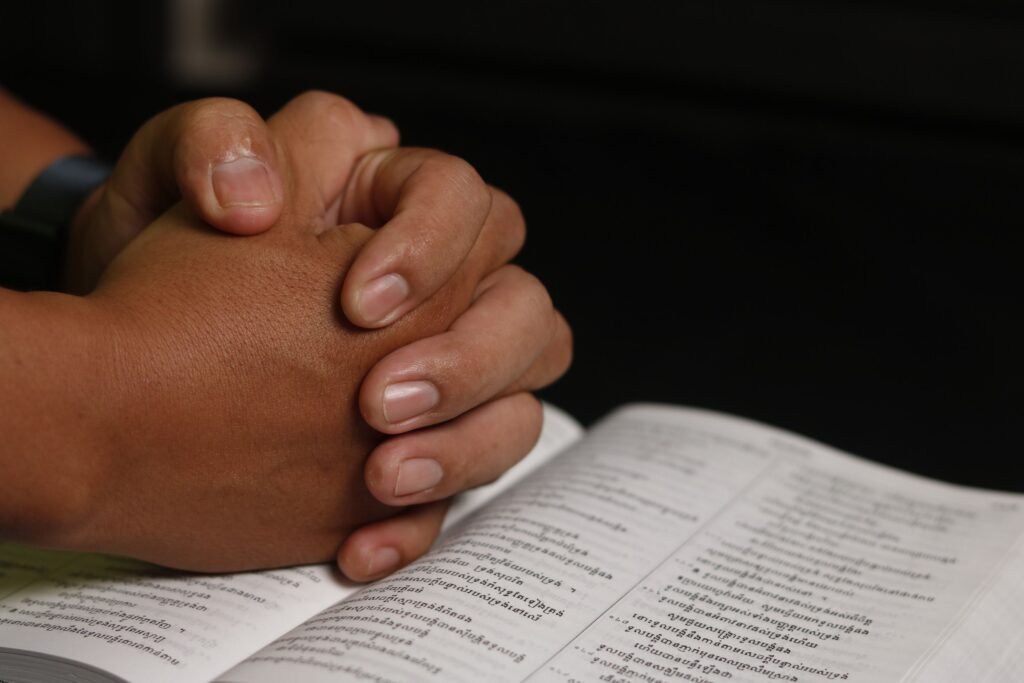
Crie uma rotina que você consiga manter
Se você quer tornar o devocional um hábito, comece pequeno.
Escolha um horário.
Escolha um lugar.
Deixe sua Bíblia acessível.
Separe um caderno, se isso ajudar.
Comece com poucos minutos.
E, principalmente, não desista porque um dia não saiu como planejado.
Com o passar do tempo, aquele momento que inicialmente parecia difícil pode se tornar uma das partes mais importantes do seu dia.
Comece hoje
Você não precisa esperar a próxima segunda-feira.
Não precisa comprar uma Bíblia nova.
Não precisa ter um caderno bonito.
Não precisa conhecer toda a Bíblia.
Não precisa saber fazer uma oração perfeita.
Você pode simplesmente começar.
Pegue sua Bíblia, escolha uma pequena passagem, faça uma oração sincera e permita que Deus fale ao seu coração por meio da Sua Palavra.
Talvez seu primeiro devocional seja simples.
E tudo bem.
Grandes mudanças podem começar com pequenos momentos de fidelidade.
Como Jesus ensinou:
“Permanecei em mim, e eu permanecerei em vós.”
João 15:4
Que o seu devocional não seja apenas alguns minutos separados na agenda, mas o começo de uma caminhada cada vez mais profunda com Deus.
Desafio de hoje
Leia. Medite. Ore. Pratique.
Faça hoje, não deixe para amanhã. Verá que o primeiro passo, abrirá caminhos extraordinários.
E permita que a Palavra de Deus acompanhe você todos os dias.
Conclusão
Aprender como começar um devocional não precisa ser complicado.
Comece com alguns minutos, escolha uma passagem bíblica, ore, reflita sobre aquilo que leu e procure aplicar a Palavra à sua vida.
Mais importante do que fazer um devocional longo é construir uma rotina sincera de busca por Deus.
Se você está começando agora, tenha paciência consigo mesmo. Continue aprendendo, continue buscando e não tenha medo de recomeçar quando necessário.
Deus não espera uma rotina perfeita. Ele deseja um coração que O busque.
Que cada momento dedicado à Palavra seja uma oportunidade de fortalecer sua fé, renovar sua esperança e lembrar que você não está caminhando sozinho.